
 Aufguss Bundles
 Ätherische Öle
  Probierboxen
 Sauna Mützen & Kissen
 Sauna
Sauna
 Bundles
 Beliebt in der Sauna
 Beliebt im Diffuser
 Sauna Eimer
 Sauna Messgerät
 Rückenlehne & Kopfstütze
 Massage
 Sauna Extras
 Geschenk bis 50 Euro
 Geschenk bis 100 Euro
 Sauna Salz
 Sauna Honig
 Sauna Peeling
 Zubehör
 Geschenk & Bundle
 Alles aus Textilien
 Saunahut
 Sauna Kissen
 Sauna Kilt
 Geschenk-Set & Bundle
 Sauna Handtuch
 Sauna Bademantel
 Alles aus Sauna
 Fasssauna
 Innensauna
 Eistonne





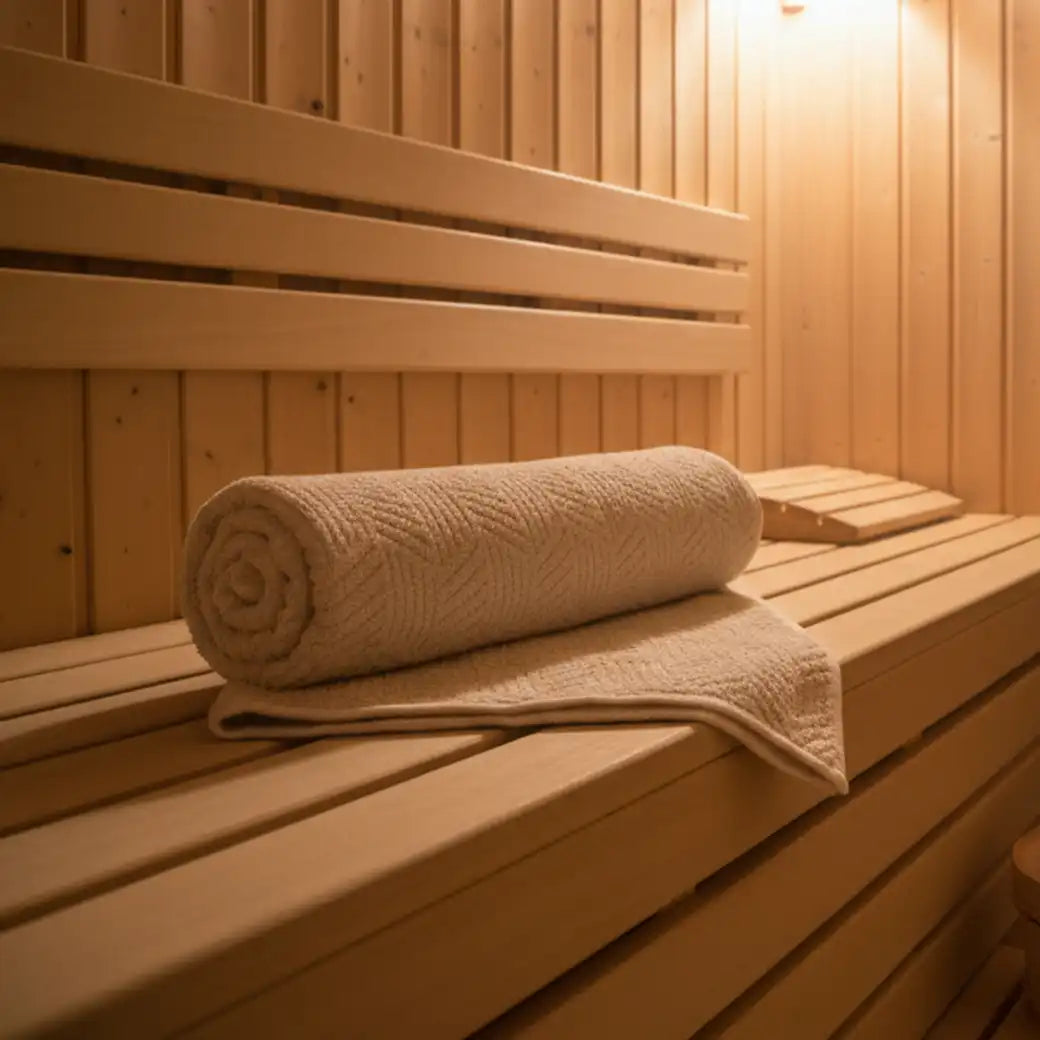


Sauna and Asthma: An Exciting Topic
The sauna, a place of warmth, relaxation, and well-being. But what if you suffer from asthma? Can you still enjoy the pleasure of a sauna session? The answer is: Yes, but with caution! Asthma and sauna are not ideal partners, but with the right measures, asthmatics can still enjoy the beneficial effects of the sauna.
Many asthmatics wonder if a sauna visit could worsen their symptoms. The question is justified, because the high temperature in the sauna can put a strain on the airways. But at the same time, the sauna also offers positive effects that can be helpful for asthma. In this article, we clarify the exciting connections between sauna and asthma, give you important tips for a safe sauna visit, and show you how to optimally use the benefits of the sauna without endangering your health.
The Benefits of Sauna for Asthma
Although the sauna can put a strain on the airways, it can also have positive effects on asthmatics. The combination of warmth and humidity can expand the bronchial tubes, stimulate mucus production, and thus facilitate breathing. Improved circulation and strengthening of the immune system are also relevant benefits for asthmatics.
How does the sauna affect the airways?
The high temperature in the sauna leads to increased humidity. This moist warmth can help to relax and expand the mucous membranes in the airways. This makes breathing easier, as air can be inhaled and exhaled more easily. At the same time, the warmth can stimulate mucus production in the airways, which helps to loosen stubborn mucus.
Mucus production is an important protective mechanism of the airways. Mucus traps foreign bodies such as dust or viruses and transports them out of the airways. In asthma patients, mucus production is often disrupted, which can lead to increased shortness of breath. The warmth of the sauna can stimulate mucus production and thus clear the airways.
Further benefits for asthmatics:
- Relaxation and stress reduction: A sauna visit promotes relaxation and reduces stress, which can have a positive effect on the course of asthma. Stress can worsen asthma symptoms, so relaxation in the sauna can have a positive effect. The combination of warmth and calm can lead to deep relaxation that calms the body and soul.
- Improved circulation: The warmth of the sauna increases circulation and promotes metabolism. This can help to relax the airways and improve the oxygen supply to the body. Improved circulation can also reduce inflammation in the airways and thus alleviate the symptoms of asthma.
- Strengthening the immune system: The sauna can strengthen the immune system and make the body more resistant to infections. This can be particularly helpful in the winter months, when asthma symptoms often become more severe. A strong immune system can help to make asthma attacks less frequent and easier to tolerate.
Risks and Precautions
Despite the possible benefits, it is important that you take some precautions if you have asthma so as not to endanger your health. Improper use of the sauna can worsen asthma symptoms.
Possible risks:
- Shortness of breath: The high temperature in the sauna can additionally strain your airways, which can lead to shortness of breath. This strain can lead to a spasm of the bronchial tubes in asthma patients and thus make breathing difficult.
- Asthma attack: If you are prone to asthma attacks, the sauna can trigger or worsen them. The high temperature can irritate the airways and thus trigger or worsen an asthma attack.
- Overheating: The high temperature can easily cause you to overheat, which can lead to circulatory problems. Especially in asthma patients, it is important to keep an eye on body temperature, as overheating can lead to a worsening of breathing problems.
How to use the sauna safely:
- Talk to your doctor: Before going to the sauna, you should definitely talk to your doctor. They can assess whether a sauna visit is suitable for you and what precautions you should take. Your doctor can check your asthma medication and give you specific tips for a safe sauna visit.
- Start slowly: Start with short sauna sessions of only a few minutes and slowly increase the duration until you feel comfortable. Give your body the opportunity to get used to the warmth and react to your symptoms.
- Pay attention to your symptoms: Observe your breathing and your physical reaction to the warmth. If you experience breathing difficulties or other symptoms, leave the sauna immediately and cool down in a cool place. It is important to listen to your body and leave the sauna if you feel unwell.
- Take your medication: Take your asthma medication as usual, both before and after your sauna visit. Your doctor can tell you if you need to adjust your medication before your sauna visit.
- Drink enough fluids: Drink enough fluids before, during, and after your sauna session to protect your body from dehydration. Through sweating, the body loses a lot of fluid, which can additionally strain the airways.
- Choose the right sauna: A Finnish sauna with a very high temperature is not suitable for asthmatics. Choose a sauna with a low temperature and good ventilation, for example, a bio-sauna. The temperature in the sauna should not be too high so as not to put too much strain on the airways.
- Avoid the steam: Avoid inhaling the steam directly, as this can irritate your airways. The steam can irritate the mucous membranes in the airways and thus worsen asthma symptoms.
- Shower after the sauna: After the sauna, you should cool down by taking a cold shower. This helps to regulate your body temperature and relax your airways. A cold shower can relax the airways and stimulate circulation.
Conclusion: Sauna for Asthma - a weighing of risks and benefits
The sauna can entail both benefits and risks for asthmatics. If you have asthma, it is important to talk to your doctor and take precautions. With the right approach, however, you can enjoy the beneficial effects of the sauna while protecting your airways. Pay attention to your symptoms and do not hesitate to stop the sauna session if you feel unwell. This way, you can enjoy your sauna visit relaxed and safely.
Remember that every body is different. What works well for one asthmatic can be problematic for another. It is important to listen to your body and only visit the sauna if you feel comfortable. Talk to your doctor if you are unsure whether a sauna visit is suitable for you.